Website Rebuild for Goldensea: Making Tri-ply Construction the Sales Argument
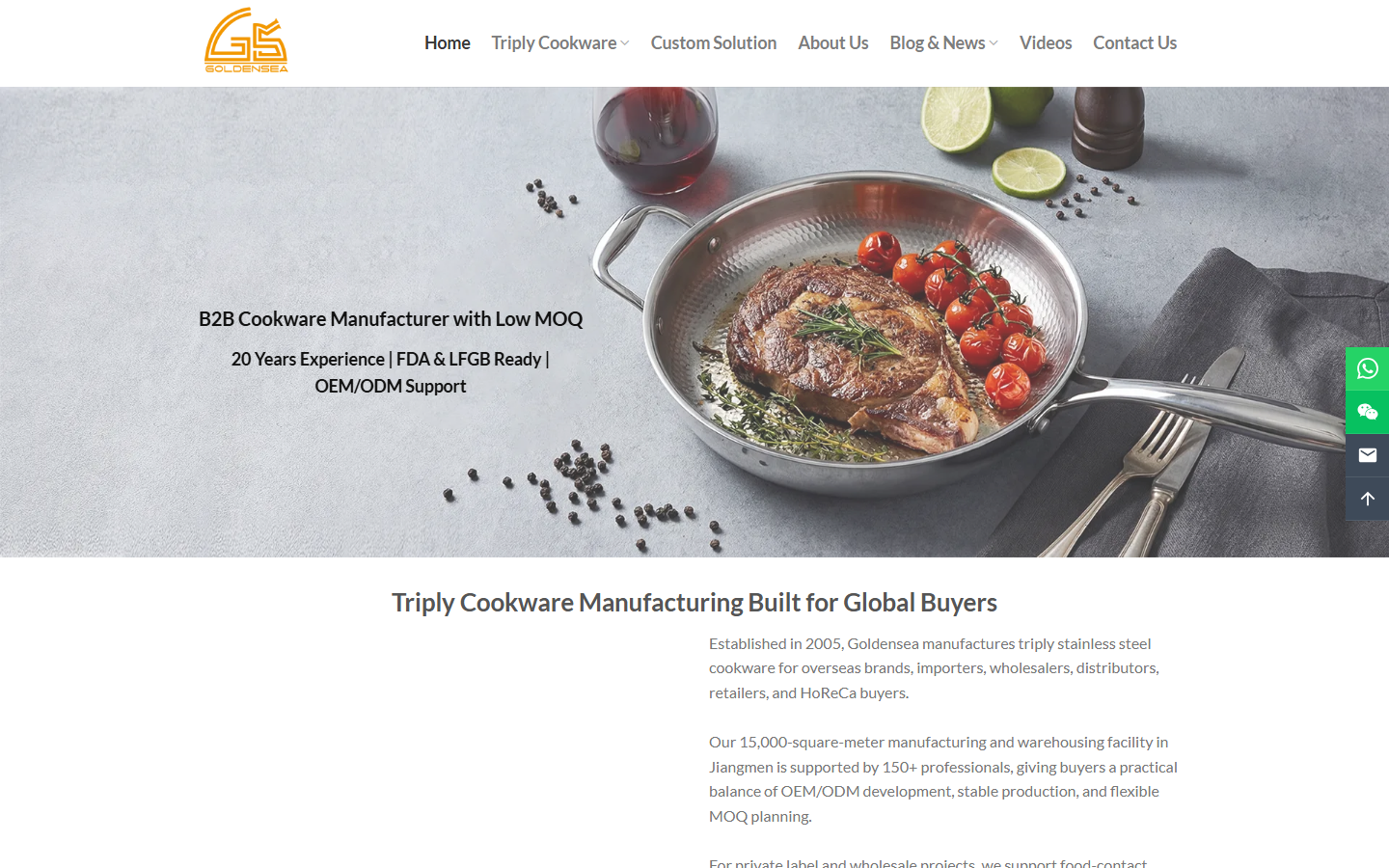
When Goldensea first approached us, their website had a problem common among experienced OEM manufacturers: it looked like every other cookware site in Jiangmen. Product photos on white, a long list of items, a "Contact Us" button at the bottom. Nothing on the page explained why a buyer should trust this factory with a private-label program.
That mattered, because Goldensea is not a trading company. The company started in Hong Kong in 2005, opened its Shenzhen office in 2007, launched its own HausRoland brand in 2009, added a Dubai branch in 2013, and set up its own factory, Goldensea Metal Manufacture, in 2018. A 2022 capacity expansion followed, and in 2023 the team made a deliberate decision to concentrate on tri-ply stainless steel cookware. Today the Jiangmen facility covers 15,000 square meters and employs more than 150 people, with warehousing for order-ready stock and a showroom in Shenzhen for sample review.
What the old site failed to show
Tri-ply cookware is a construction story. An aluminum core bonded between two layers of stainless steel determines how heat spreads, how the pan behaves on induction, and how long it survives commercial dishwashers. The previous site mentioned "tri-ply" in headings but never showed the layers, the bonding process, or the difference between a brazed base and impact-bonded base. Buyers who did not already know the category had no way to judge quality, so they compared on price alone — the worst possible conversation for a factory at this level.
The inquiry path was equally flat. One generic form asked for name, email and message. There was no way for a buyer to indicate target market, volume, packaging needs, or compliance requirements, which meant every first reply started with the same five questions.
Rebuilding around the buying decision
We restructured the site around three questions a private-label buyer actually asks: can you build my product, can you meet my market's compliance rules, and can you hit my delivery window.
The product section now opens with construction rather than decoration. Cross-section graphics show the tri-ply layers, and each category page — cookware sets, frying pans, saucepans, casseroles, steamers — states base construction, compatible heat sources, available diameters and finish options. Handle and lid assembly, polishing finishes and laser marking are presented as customization choices, because that is how buyers specify them.
A separate OEM/ODM project page walks through the sequence from concept and mold development to sampling, compliance documentation and mass production. FDA and LFGB readiness is stated where it matters — next to the products and certifications buyers need to check — instead of being buried in an About page paragraph.
The RFQ form was rebuilt with fields for target market, estimated annual volume, packaging format, logo placement and required certification. It takes a buyer ninety seconds longer to complete and saves both sides a week of email.
Design and performance
Visually, the site moved away from catalog white toward warm neutral surfaces that let stainless steel read as stainless steel. Food photography is used sparingly, on category headers only; technical pages stay clean so specification tables remain legible on a phone in a buyer's hand.
Because most sourcing managers browse on mobile between meetings, we rebuilt the layout mobile-first, compressed product imagery to WebP, and cut the homepage payload to keep first paint under three seconds on a 4G connection. Specification tables collapse into readable cards on small screens rather than forcing horizontal scrolling.
Google visibility for specification searches
Cookware buyers search by construction and compliance, not by brand: "tri-ply stainless steel cookware manufacturer," "LFGB certified cookware supplier," "private label cookware MOQ." We built dedicated pages around those clusters, wrote the technical copy in plain English, added structured data for products and organization, and kept the URL structure shallow so category pages sit two clicks from the homepage.
Goldensea had also been running a blog with useful factory content — process explanations, material comparisons — that was previously orphaned. We linked those articles from the relevant product pages so they support conversion instead of sitting invisible.
What changed after launch
The measurable shift was in inquiry quality. RFQs now arrive with market, volume and certification already stated, and the sales team spends its first reply on pricing and sampling rather than discovery. Buyers reference specific construction details in their first message — evidence they read the product pages, not just the homepage.
For a factory that competes against trading companies on transparency, that is the point. The website now does the explaining that used to require a factory visit.
-
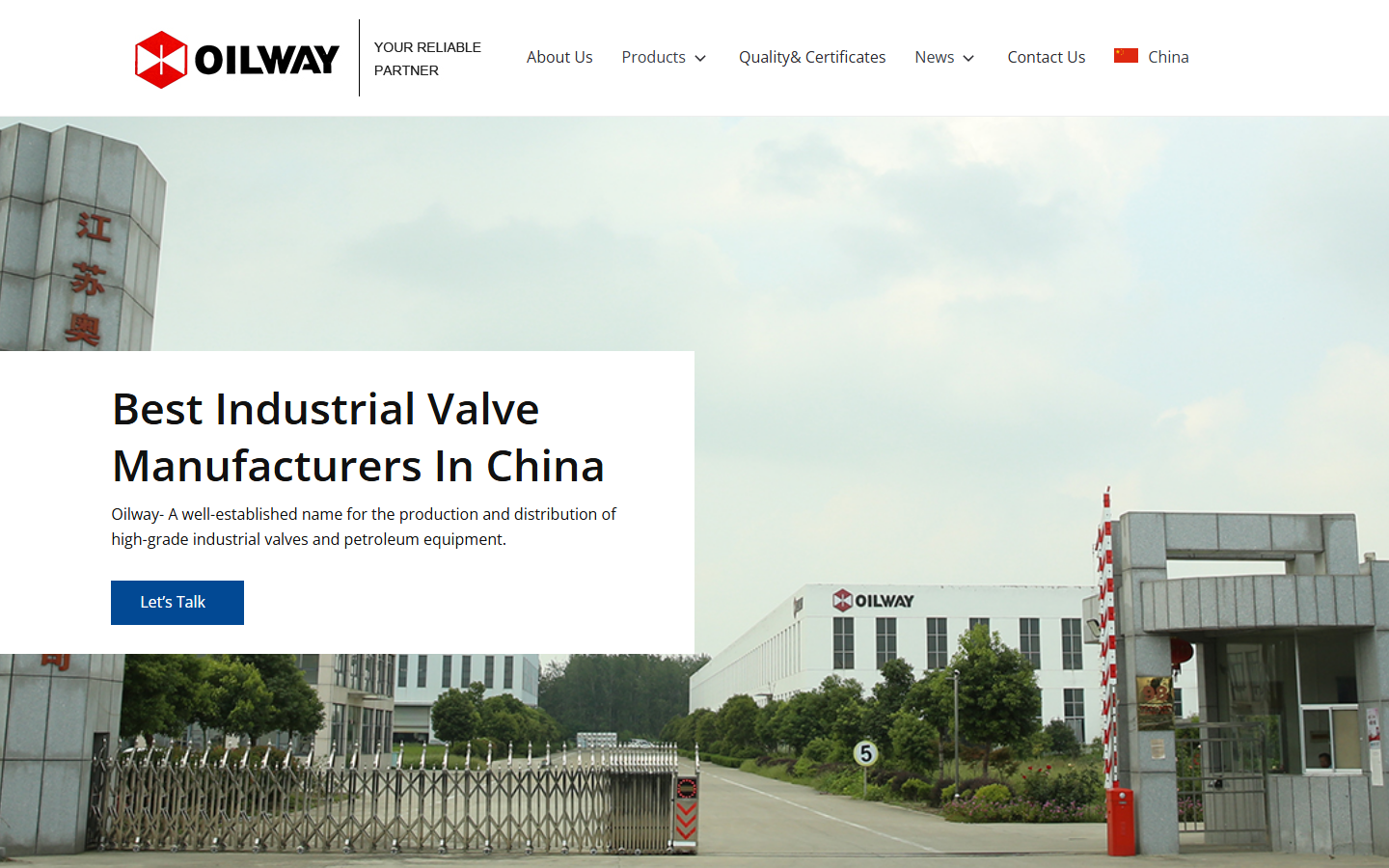
Website Development for Oilway: Specification-First Design for API Valve Buyers
Signed a website development agreement with Oilway, an i...
-
Website Rebuild for Goldensea: Making Tri-ply Construction the Sales Argument
When Goldensea first approached us, their website had a ...
-
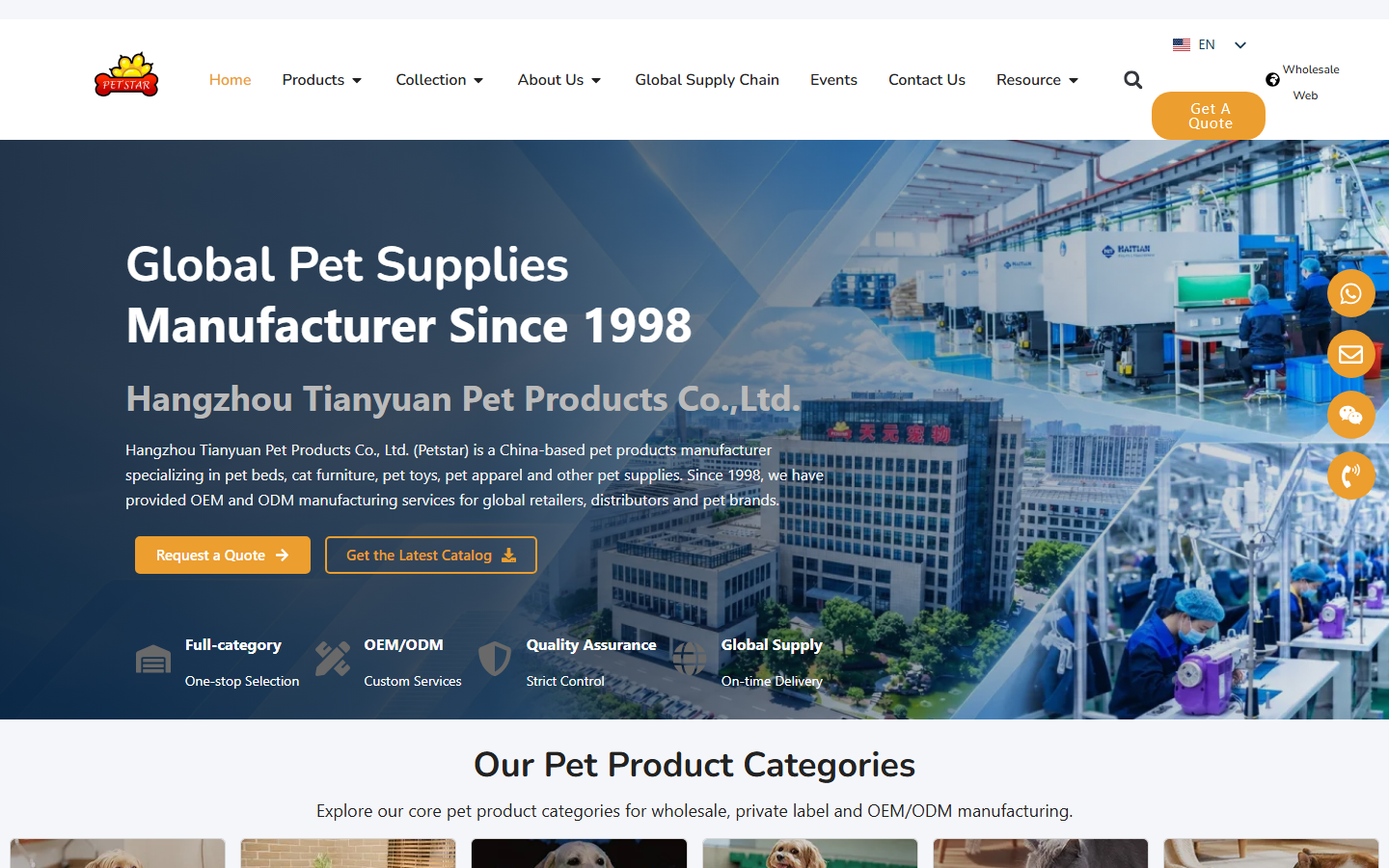
Petstar: Making 30,000 Pet Products Navigable in One Screen
Hangzhou Tianyuan Pet Products — Petstar on its export s...


